


Do salmon eat genetically modified raw materials?
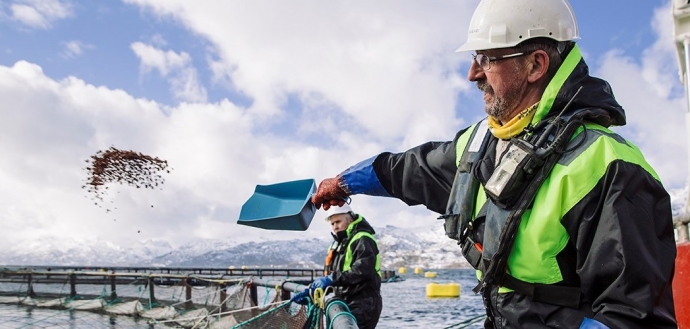
Fish feed in Norway does not contain genetically modified ingredients.
Genetically modified (GMO) products contain microorganisms, animals or plants whose genetic characteristics have been altered through modern genetic engineering. GMO technology makes it possible to use genetic material in new ways. The aim is to create certain attributes or remove undesirable traits. In Norway, genetically modified organisms may not be used in animal feed without approval from the Norwegian Food Safety Authority (the FSA). There are currently no approved genetically modified food or feed products under the Food Act. Norwegian shops should not stock any products with genetically modified content over the approved limit of 0.9 percent. Importers of food or feed that may contain genetically modified ingredients have a responsibility to follow the Norwegian regulations. Such imports are monitored by the FSA.
GMO and fish feed
In the past, Norwegian fish feed producers could apply to the FSA for an exemption to use EU-approved genetically modified materials. Feed companies wanted this flexibility in case it proved difficult to obtain ingredients that are not genetically modified. However as nobody made use of the exemption, it was removed in 2014. If salmon feed producers want to sell genetically modified feed, they have to seek approval from the FSA in accordance with applicable regulations on animal feed.
In the future, it may become difficult to obtain feed ingredients that are completely GMO-free. For this reason, there is ongoing research and development on this subject. In 2015, Nofima started a four-year project in which salmon is fed with rapeseed oil that has been genetically modified to contain omega-3 fatty acids. The aim is to test how it affects the fish and their health and to investigate if it leaves traces in the fish.
Do salmon eat processed animal protein?
Norwegian fish feed manufacturers do not use ingredients derived from pigs.
As raw materials from pigs are controversial in some countries, Norwegian fish feed manufacturers informed the Norwegian Food Safety Authority (the FSA) that they do not use ingredients derived from pigs in fish feed production.
The outbreak of mad cow disease in the 1980s and 1990s was linked to processed animal proteins from cattle carcasses. As a result, all kinds of processed animal protein, including those from fish, pork, and poultry, were prohibited in feed production for animals that are used for food production. The ban was implemented in Norway through the EEA Agreement.
After careful risk assessments, a change of EU rules in 2013 made it legal to use processed materials from pigs and poultry as a source of protein in feed for farmed salmon. As raw materials from pigs are controversial in some countries, Norwegian fish feed manufacturers informed the Norwegian Food Safety Authority (the FSA) that they do not use ingredients derived from pigs in fish feed production and that the FSA will be informed if this changes.

